Accessibility isn’t an add-on; it’s how participation actually happens
As participatory grant-makers, we talk a lot about participation. It’s our bread and butter. Panels, conversations, shared decision-making, that’s where our work comes alive.
But there’s something important sitting underneath all of that: access.
It’s easy to assume that if something is open to everyone, it’s automatically accessible. In reality, participation only happens when people can genuinely take part, comfortably, confidently, and without having to jump through hoops just to be in the room.
There is also something to be said about meeting people beyond halfway. Gone should be the days where guests, collaborators or other people you work with should have the onus of asking on them. If accessibility isn’t made to be explicit - and often that means being offered - it may not be acknowledged. Making accessibility accessible is the first step: consulting people on their needs, offering assistance and treating this as bare minimum.
There’s an old (and true) idea that when you make something more accessible, you make it better for everyone. We see that play out time and again in our work. When access is built in from the start, more people show up, more voices are heard, and the quality of decision-making improves for everyone involved.
Cultural accessibility: noticing isn’t enough, acting matters
Cultural accessibility often starts with awareness, but it shouldn’t stop there.
It’s not just about knowing that people may need to pray, or have specific dietary requirements. It’s about shaping sessions around that reality. That can mean building breaks around prayer times, rather than treating prayer as something people have to quietly squeeze in on their own. It can mean making sure that when someone steps out to pray, they’re not missing a key part of the discussion or decision-making.
Small choices like this send a big signal: you belong here, and this space is designed with you in mind.
The same applies to food. Making sure meals actually work for everyone – culturally, religiously, practically – isn’t a nice extra. Going beyond this, timing matters too, especially for attendees who are diabetic and need to manage insulin. It’s part of creating an environment where people can fully engage without feeling like an afterthought.
Physical accessibility: it’s always worth asking
Physical accessibility can come with extra costs, and it’s important to be honest about that. Accessible venues aren’t always the cheapest. Transport support takes planning and budget. But what you gain in return is participation from people who might otherwise be excluded altogether.
That might look like:
choosing venues that are genuinely step-free and easy to navigate
arranging transport to and from sessions
thinking about lighting, seating, noise levels and room layout
One of the simplest and most powerful things you can do is ask. Ask people what they need. Ask early, and ask in a way that makes it clear there’s no judgement or inconvenience attached. Often, people are very clear about what will help them take part – we just need to create the space for that conversation.
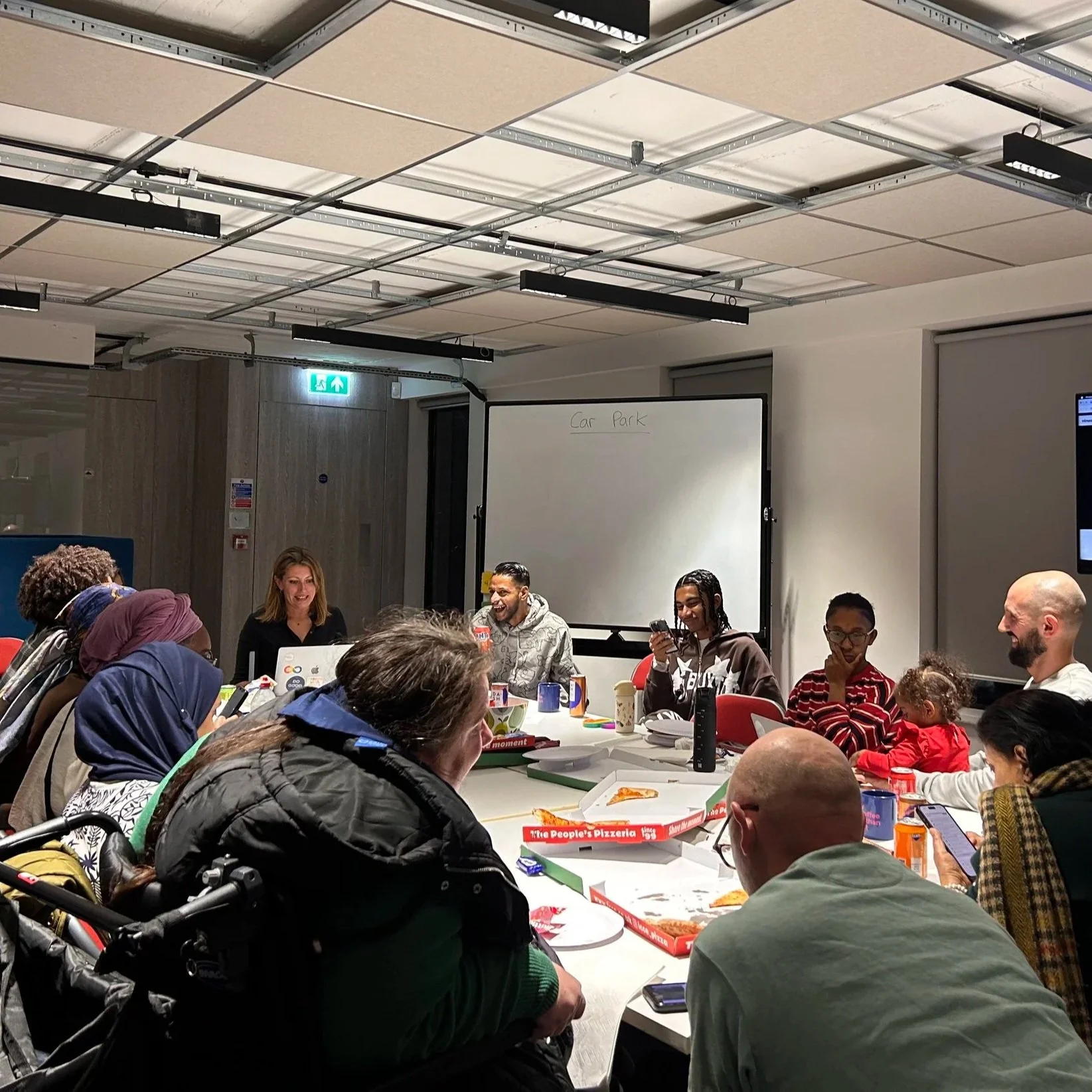
Panel in progress… hot food, assisted commute, childcare, decisions and laughs, all in one session.
Responding to real lives, in real time
Some of the most meaningful accessibility adjustments are the ones that respond to people’s lives as they are, not as we wish they were.
Sometimes that means covering the cost of childcare so someone can attend a panel without stress (sometimes this means extending the invite for children to be brought into the session – we've had older children doing homework in adjacent rooms, and we’ve had babies bottle fed at the decision-making table). Sometimes it means making sure there’s a hot meal when a session runs across lunchtime or the early evening. Sometimes it’s as simple as having fidget toys on the table to help people concentrate and stay engaged.
These aren’t “special arrangements”. They’re practical responses to the reality that people are juggling work, caring responsibilities, health needs, and everything else life throws their way.
When those needs are met, people don’t just attend - they participate. They contribute. They lead.

Our bag of tricks
Doing better, together
Access isn’t something any of us ever fully “get right”. It’s ongoing. It requires listening, adapting, and being willing to change how we do things.
What we do know is this: improving access doesn’t take anything away from anyone else’s involvement. It doesn’t dilute participation. It strengthens it.
It also really helps to have diversity in a staff team, where we understand each other’s requirements and ask these questions freely; as a Muslim with neurodivergence, it’s likely that I’ll know what time is the next prayer time today, what dates Ramadan might fall or whether the text on the presentation is hard to follow along.
Making our work more accessible doesn’t just allow more people to take part - it actively empowers them. It says: you are welcome here, your time matters, and your voice is valued.
This will look different over time. Right now, it looks like:
having portable prayer mats on hand;
having our videos have subtitles (a nifty hack is that there’s a chrome extension for this when you receive Vimeo videos void of subtitles);
having a higher staff to panellist ratio (this helps when people may require a little more hand-holding, for any whispered questions, anyone needing a check-in or to take a break etc);
offering participants alternative payment methods (a choice of vouchers and having benefit caps in mind).
That’s something we can all do better at. And it’s something our communities, and our decisions, are better when we do.
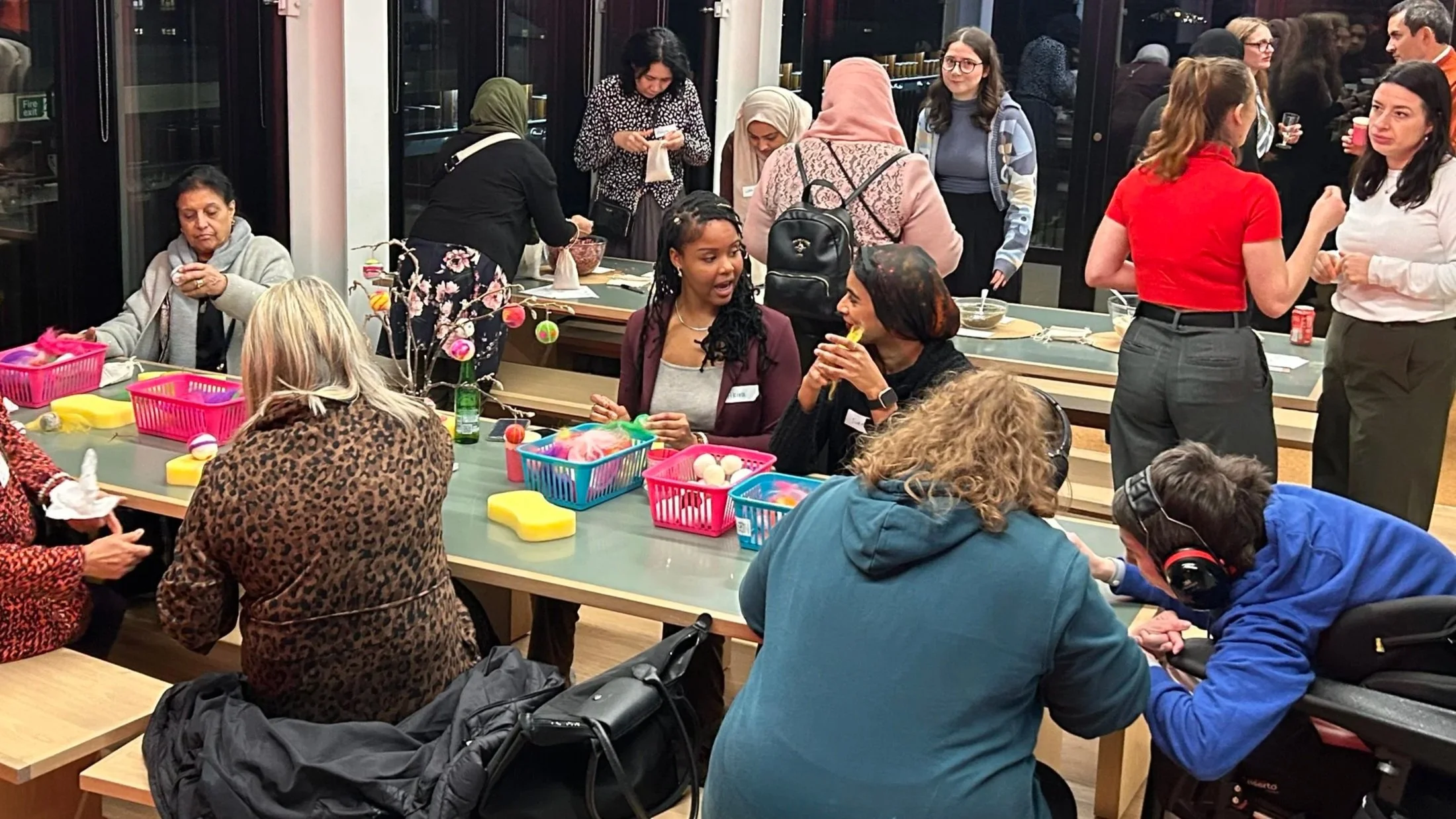
A vibrant group of people are gathered around long wooden tables in a brightly lit community space. Several individuals are seated, focused on a craft activity with pink and blue baskets filled with materials, while others stand nearby engaged in conversation. The room has large windows in the background reflecting the indoor lights. The atmosphere is busy and collaborative, showing people of various ages and styles of dress working together.